Cart
0
Is it simply a fancy type of bacon? Can you eat it straight from the packet? And what’s the real difference between those neat cubes and the paper-thin slices you see at the deli counter? When it comes to the world of artisan cured meats, few ingredients are as wonderfully versatile-or as frequently misunderstood-as authentic Italian pancetta. It's a cornerstone of countless traditional recipes, prized by chefs and home cooks alike for the savoury, salty depth of flavour it brings to a dish, a quality that is simply unmatched.
Here at The Artisan Butcher, we believe that a true appreciation for food comes from understanding its story. That's why our team has put together this guide to demystify this Italian classic. We’ll explore its time-honoured curing process, explain the different types available, and share our expert tips on how to buy, cook, and store it. By the end, you'll feel confident choosing the perfect pancetta for any recipe and be ready to bring a touch of Italian mastery to your kitchen.
Key Takeaways
- Understand the crucial difference between salt-cured pork belly and smoked bacon to achieve authentic Italian flavour.
- Learn to identify the two main shapes of pancetta and discover which is best for dicing into sauces versus slicing thinly.
- Master the essential cooking technique of slowly rendering the fat to unlock its deep, savoury flavour in any dish.
- Get clear guidance on proper storage and find out the definitive answer on whether it is safe to eat raw.
The Fundamentals: What is Pancetta and How Is It Made?
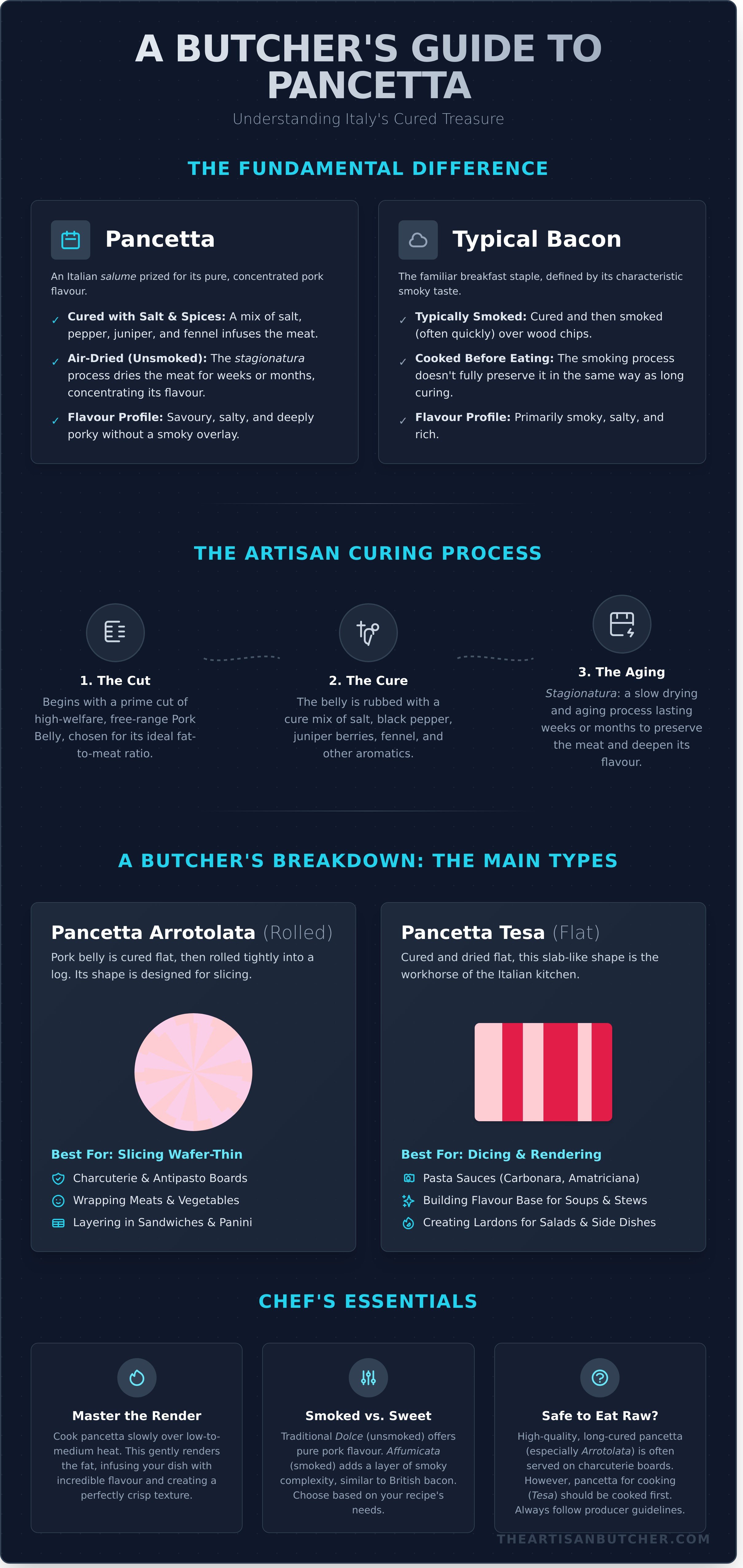
At its heart, pancetta is Italy's answer to bacon, but with a character all its own. It is a traditional salt-cured meat made from pork belly, known in Italian as salume. Unlike most bacon found in the UK, which is smoked, pancetta is cured in salt and spices and then dried for a period of weeks or months. This time-honoured process is what gives it a dense texture and a pure, concentrated pork flavour. For a deeper dive into its origins and types, a great resource is the Wikipedia article on what is pancetta? In Italian kitchens, it is a cornerstone ingredient, often used as a flavour base, or soffritto, to lend a savoury depth to pasta sauces, soups, and stews.
To better understand this concept and its unique flavour profile, watch this helpful video:
The Artisan Curing Process
The magic of authentic pancetta lies in its artisan preparation. The process begins by rubbing a prime cut of pork belly with a cure mix of salt and carefully selected spices. While recipes vary between regions and producers, common aromatics include black pepper, juniper berries, fennel, and nutmeg. After curing, the meat undergoes a crucial drying and aging period known as stagionatura. This slow, patient process allows moisture to evaporate, preserving the meat and concentrating its rich, savoury flavour. This stands in stark contrast to mass-produced bacon, which is often quickly cured and artificially smoked.
Pork Belly: The Foundation of Flavour
The choice of pork belly is no accident; it is the perfect cut for creating this delicacy. Its generous ratio of fat to meat is essential for the final product's texture and taste. As the pancetta cooks, the fat renders down, infusing dishes with incredible richness while the meat becomes delightfully crisp. In line with our ethos at The Artisan Butcher, we believe that the finest quality product starts with the finest ingredients. That’s why we insist on using high-welfare, free-range pork, where the animal has had a natural life, resulting in a flavour that is simply second to none.
The Main Types of Pancetta: A Butcher's Breakdown
When you step into our shop or browse online, you'll find that not all pancetta is created equal. Understanding the different types is the key to unlocking the finest flavour for your dish. It's a product of time-honoured tradition, and the way it's prepared and shaped has a huge impact on its final use in the kitchen. The artisan process of how pancetta is made results in two distinct forms and flavour profiles, and as your butcher, we're here to help you choose the perfect one.
Shape: Pancetta Arrotolata (Rolled)
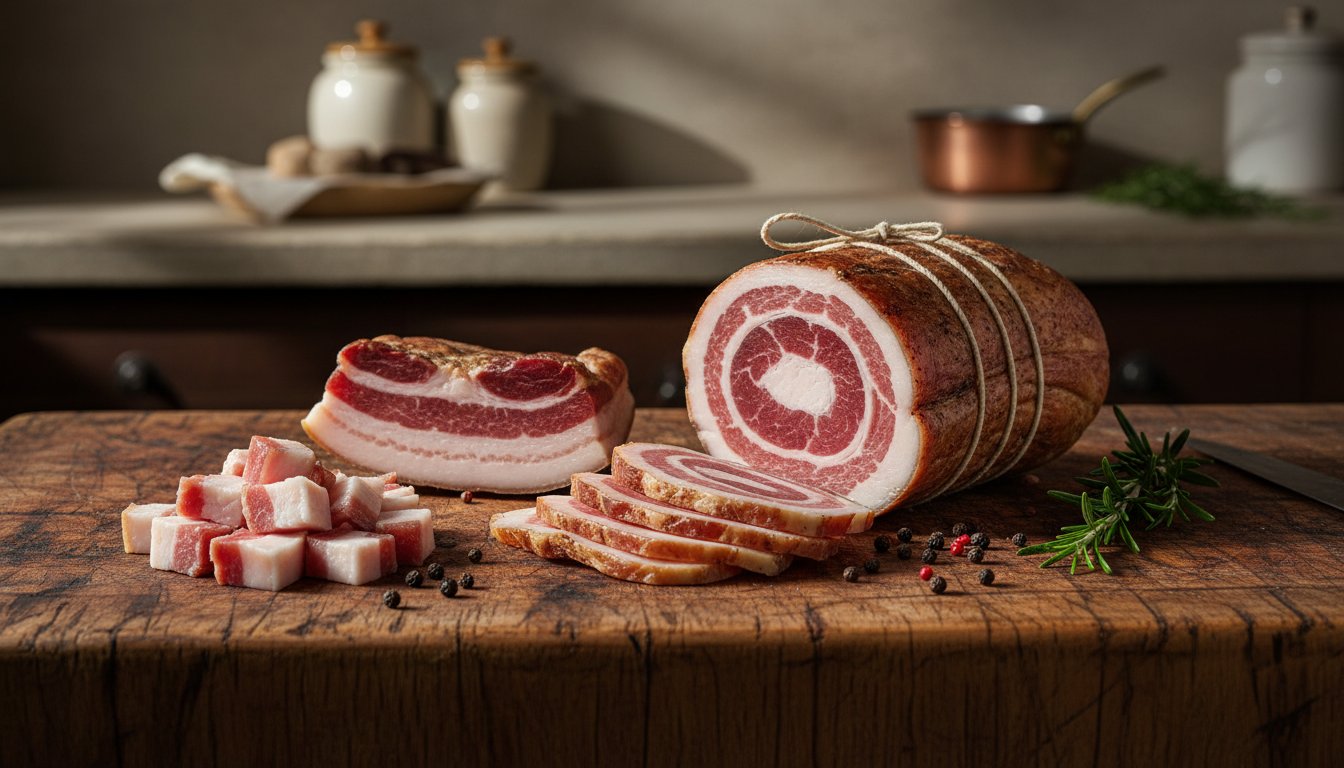
Pancetta Arrotolata is made by curing a flat piece of pork belly, which is then rolled tightly into a log and tied, resembling a large salami. This compact, round shape is designed for slicing. When cut wafer-thin, it reveals a beautiful spiral of meat and fat. It’s the ideal choice for applications where it's eaten with minimal cooking.
- Best For: Charcuterie boards, antipasto platters, and layering in sandwiches or panini.
- Top Tip: Try wrapping thin slices around chicken breasts or asparagus before roasting for a magnificent, self-basting layer of flavour.
Shape: Pancetta Tesa (Flat)
Pancetta Tesa is pork belly that has been cured and dried flat, giving it a slab-like appearance very similar to British streaky bacon. This is the workhorse of the Italian kitchen. Its flat shape makes it incredibly easy to slice into lardons (strips) or dice into small cubes (cubetti), which are perfect for rendering down to build a rich flavour base.
- Best For: The essential starting point for pasta sauces like Carbonara or Amatriciana.
- Top Tip: Gently fry diced Tesa to render the fat before adding onions or garlic to infuse your entire dish with its incredible savoury depth.
Flavour: Affumicata (Smoked) vs. Dolce (Unsmoked)
Beyond its shape, the most significant difference comes down to flavour. The most traditional and widespread style is Pancetta Dolce (sweet). This doesn't mean it's sugary; rather, it's unsmoked, allowing the pure, sweet flavour of the cured pork and delicate spices to shine through. In contrast, Pancetta Affumicata is lightly smoked, usually over woods like beech, adding a layer of smoky complexity. For many of us in the UK, this flavour is very familiar, as most British bacon is smoked. Choosing between them is simply a matter of taste and tradition.
How to Buy and Select the Best Pancetta
Not all pancetta is created equal, and choosing a high-quality product is the first step toward a truly magnificent dish. Whether you're at a supermarket or your local butcher, knowing what to look for ensures you bring home the finest flavour. Making an informed choice empowers you to select an artisan product that will elevate your cooking from good to great.
What to Look For at the Butcher's Counter
When you have the opportunity to see the product up close, use your senses and don't be afraid to ask questions. A passionate butcher will always be happy to share the story behind their craft. Here are the key signs of a quality pancetta:
- Colour and Fat: Look for a deep, rosy pinkish-red meat alongside streaks of creamy, pure white fat. Avoid any pieces that look greyish or have yellow-tinged fat. A good, even distribution of fat throughout the meat is a hallmark of a well-cured product.
- Texture: The pancetta should feel firm and solid to the touch, never slimy, wet, or overly soft. This firm texture is a direct result of a proper, patient curing and drying process.
- Provenance and Process: Ask your butcher about the curing time and the ingredients used. A time-honoured cure often involves simple, high-quality spices. Understanding the process can also help you distinguish between the main types of pancetta, such as the flat stesa or the rolled arrotolata.
Pre-Packaged vs. Freshly Sliced
While pre-packaged, cubed pancetta offers convenience for a quick weeknight carbonara, it can sometimes be made from lower-quality off-cuts and may lose its aromatic qualities faster. For the best flavour and texture, we always recommend having it freshly sliced at the counter.
When you buy from a whole piece, you can specify the thickness-paper-thin slices for wrapping around chicken or thicker lardons for rendering down in a stew. For those who use it often, purchasing a whole piece to slice at home offers maximum freshness and value. At The Artisan Butcher, we take immense pride in our curing process, and we believe the flavour speaks for itself. Explore our traditionally cured pancetta and taste the difference that time-honoured methods make.
Cooking with Pancetta: Tips from the Kitchen
In any kitchen that values deep, savoury flavour, pancetta is less an ingredient and more a secret weapon. Unlike bacon, which is often the star, this cured meat works beautifully as a foundational flavour, enriching sauces, soups, and roasts from within. Its magic lies in its high-fat content, which, when treated with care, transforms a simple meal into something truly special.
The key to unlocking its incredible taste is to respect the process and let the quality of the meat shine.
The Golden Rule: How to Render Pancetta Fat
The most important technique to master is rendering. Start by placing your diced or sliced pancetta into a cold, dry frying pan, then turn the heat to low. This gentle start allows the fat to slowly melt and separate from the meat without burning it. As the fat renders, the meat will become wonderfully crisp. Once golden, remove the crispy pieces with a slotted spoon and set them aside. You are left with a pan of flavourful liquid gold, perfect for sautéing onions, garlic, or vegetables to build the next layer of your dish.
Classic Italian Dishes
In its Italian homeland, pancetta is the heart of many time-honoured recipes. It provides a depth of flavour that is simply irreplaceable. For an authentic taste of Italy, try it in:
- Spaghetti alla Carbonara: This is the traditional choice, lending its signature cured flavour without the smokiness of bacon.
- Bucatini all'Amatriciana: The rendered fat forms the essential base for this classic spicy tomato sauce.
- Pasta e Fagioli: A small amount adds a rich, savoury undertone to this hearty bean and pasta soup.
Creative Ways to Use Pancetta
Beyond the classics, its versatility is remarkable. It’s a wonderful way to add flavour and texture to a wide range of dishes. We love using it for:
- Wrapping: Drape it around chicken breasts, fish fillets, or spears of asparagus before roasting to keep them moist and add flavour.
- Sprinkling: Scatter crispy, rendered pieces over salads, roasted Brussels sprouts, or creamy soups for a salty crunch.
- Stuffing: Finely dice and mix it into stuffings for roast chicken or pork to infuse the entire joint with its savoury taste.
- Braising: Add a few thick slices to the pot when braising beef or lamb to enrich the entire dish.
Whether you are honouring a traditional recipe or creating your own, starting with the finest quality charcuterie makes all the difference. Our team is always here to help you choose the perfect cut for your next culinary adventure.
How to Store Pancetta and Serve It Safely
To truly appreciate the rich, complex flavour of high-quality pancetta, it’s essential to handle and store it correctly. Proper care not only preserves its wonderful texture and taste but also ensures it’s perfectly safe to enjoy, whether cooked into a hearty dish or served as a delicate part of a charcuterie selection.
Proper Storage Techniques
Following these simple, time-honoured storage methods will ensure your meat remains in peak condition from the moment you bring it home. For the best flavour and texture, we recommend the following:
- Unopened Vacuum Packs: Keep the package in the coldest part of your refrigerator. Always follow the use-by date provided on the label for guaranteed freshness.
- Opened or Freshly Cut: Once opened or bought loose from the butcher's counter, wrap it tightly in butcher paper or wax paper. This allows the meat to breathe while preventing it from drying out. Store it in the fridge and aim to use it within one week.
- Freezing for Later: It freezes exceptionally well. We suggest dicing or slicing it into useful portions before freezing. Tightly wrap each portion and store them in a freezer-safe bag for up to three months.
Can You Eat Pancetta Raw?
This is one of the most common questions we hear at the shop, and the answer depends entirely on the type you have. As a cured meat, it isn’t technically ‘raw’ like fresh pork; the salt-curing process makes it safe to eat. However, only high-quality, thinly sliced pancetta arrotolata (the rolled variety) is intended to be eaten uncooked. It’s cured for an extended period, resulting in a delicate, melt-in-the-mouth texture perfect for antipasti.
In contrast, pancetta tesa (the flat slab variety), often sold cubed, is crafted for cooking. Its purpose is to render its delicious fat and infuse dishes with savoury depth. If you are ever unsure, please ask our team-we're always here to help you enjoy our products safely.
Serving on a Charcuterie Board
When you have some beautiful, paper-thin slices of pancetta arrotolata, it deserves a starring role on a charcuterie board. Its delicate sweetness and salty notes are a true artisan delight. Arrange the slices elegantly, allowing them to drape or fold naturally. For the perfect pairings, we recommend:
- Hard Cheeses: The saltiness of a good Pecorino Romano or a nutty Parmigiano-Reggiano complements the meat wonderfully.
- Other Meats: To complement the Italian pancetta, consider adding varieties from other great European traditions. For example, high-quality Spanish hams offer a wonderfully nutty and complex flavour, and specialists like Jambons Oliveras provide an excellent selection online.
- Accompaniments: Add some sharp, briny olives, cornichons, and a loaf of crusty, fresh bread to balance the richness. For a touch of sweetness, a quality artisanal preserve can also be a wonderful addition, and you can discover Conserverie Maison Marthe for some excellent examples.
- Wine: A glass of robust Italian red wine, such as a Chianti or Barbera, is the traditional and ideal companion.
Explore our full range of artisan cured meats at theartisanbutcher.com to create your perfect platter.
Embrace the Rich Tradition of Artisan Pancetta
From understanding the difference between rolled arrotolata and flat tesa to mastering its use in the kitchen, you are now equipped to appreciate this Italian delicacy in all its glory. The most important takeaway is that quality matters; the flavour of exceptional pancetta is born from the finest pork and time-honoured curing techniques. This dedication to tradition is what transforms a simple ingredient into the heart of a memorable meal.
Here at The Artisan Butcher, our team shares this passion for craftsmanship. We believe in our ethos of quality, which is why we only use high-welfare, free-range British pork and cure our meats using traditional methods. Our passionate butchers are always on hand to offer their expert advice, ensuring you bring the very best to your family's table.
Ready to experience the difference for yourself? Discover our range of artisan-cured meats, crafted with tradition. We invite you to bring this authentic taste into your kitchen and create something truly special.
Frequently Asked Questions About Pancetta
What is the real difference between pancetta and bacon?
The fundamental difference lies in the preparation. Here at the shop, we create our artisan pancetta by salt-curing and air-drying pork belly, a time-honoured Italian method that concentrates its pure pork flavour. Bacon, on the other hand, is also cured but is then typically smoked. This smoking process is what gives bacon its distinctive campfire aroma and taste, which you won't find in traditional pancetta. Both are delicious, but they offer very different flavour profiles for your cooking.
Can I use bacon as a substitute for pancetta in recipes?
While you can, it's important to understand it will significantly change the character of your dish. Substituting bacon will introduce a strong smoky flavour that isn't present in pancetta. For dishes where the delicate, savoury pork flavour is key, like a classic Carbonara, we'd always recommend sticking with pancetta. For a hearty soup or stew where a smoky note would be welcome, bacon can work in a pinch. It’s all about the final taste you're hoping to achieve.
Is pancetta the same as prosciutto?
This is a common question we get! They are quite different. Pancetta is made from the pork belly and is a cured, unsmoked product that is almost always cooked to render its fat and add a deep, savoury flavour. Prosciutto, however, is made from the hind leg of the pig. It undergoes a much longer drying process and is celebrated for its delicate, salty-sweet flavour, typically served uncooked in very thin slices alongside melon or on a charcuterie board.
Why is pancetta sometimes more expensive than bacon?
The price difference often comes down to the craft and time involved. Producing the finest quality pancetta is a more lengthy, artisan process. It is carefully cured and air-dried for weeks, during which it loses a significant amount of water weight. This concentrates the flavour but means the final yield is lower. Mass-produced bacon often involves a quicker curing process, making it less labour-intensive and resulting in a lower price per kilogram at the supermarket.
How long does pancetta last in the fridge once opened?
Proper storage is key to preserving its wonderful flavour. If you've bought pre-sliced, vacuum-packed pancetta, you should aim to use it within 5-7 days of opening the package. For a whole piece that you've purchased from our counter, it will last longer. When wrapped tightly in greaseproof paper or a beeswax wrap, a solid piece can last for up to three weeks in your fridge, allowing you to slice off what you need for various meals.
What does pancetta taste like?
True pancetta has a wonderfully deep, savoury, and distinctly pork-forward flavour. Unlike bacon, it isn't smoky. Instead, its taste is clean and salty, with a rich, buttery texture from the fat. Depending on the specific cure, you might also detect subtle, aromatic notes of black pepper, fennel, juniper, or other spices. It’s this complex, meaty flavour that makes it such a fantastic foundation for so many classic Italian sauces, soups, and stews.