Cart
0
Have you ever stood at the butcher’s counter or scanned a restaurant menu and felt a little puzzled by the term ‘flat iron steak’? You’re not alone. For many, it’s an unfamiliar name that brings up questions: Is it tender? Is it just another name for flank or skirt? We understand the hesitation; no one wants to bring home a cut of meat only to be disappointed. But here at The Artisan Butcher, we believe the flat iron steak is one of the most rewarding and unfairly overlooked cuts available-a true butcher's secret.
This hidden gem boasts a tenderness that rivals a fillet and a deep, beefy flavour that's second to none, all at a price that represents incredible value. In this guide, our team is passionate about sharing our time-honoured knowledge with you. We'll walk you through its surprising origin, how to identify the finest quality cut, and most importantly, the simple, trusted methods for cooking it to absolute perfection. Prepare to confidently cook this wonderful steak and impress your family with a new favourite.
Key Takeaways
- Discover how a lesser-known cut from the shoulder offers the tenderness and deep flavour of premium steaks without the premium price tag.
- Learn the surprising story of the flat iron steak and see how it compares to other popular cuts in taste, texture, and value for money.
- Master the simple, high-heat cooking method that guarantees a perfectly juicy and tender result in just a few minutes.
- Find out what to look for at the butcher's counter-from marbling to colour-to ensure you're choosing the very best cut for your meal.
What is a Flat Iron Steak? The Butcher's Introduction
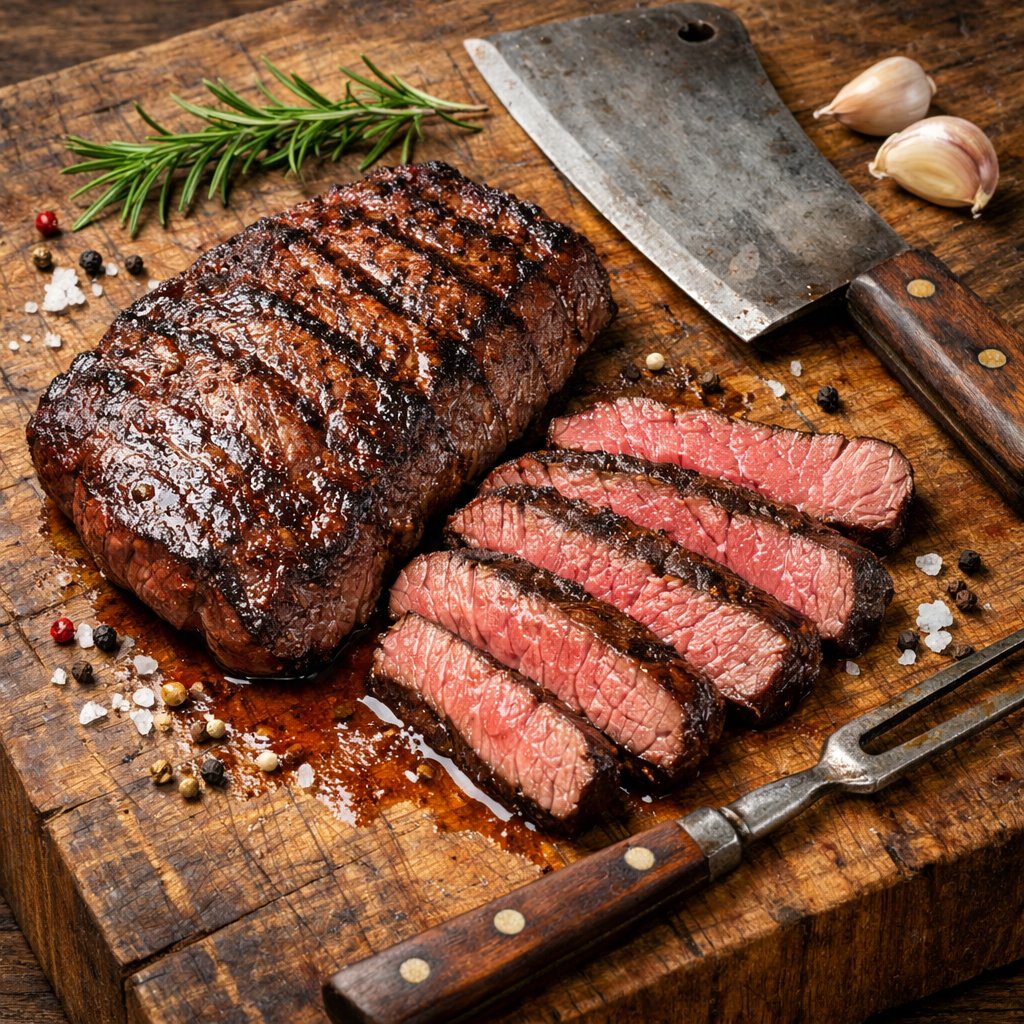
For those in the know, the flat iron steak is one of butchery's best-kept secrets. It offers a remarkable combination of deep flavour and surprising tenderness, often providing exceptional value compared to more famous cuts. Known across the UK by various names, including Butler's Steak or Top Blade, this cut is celebrated for its uniform thickness and beautiful, intricate marbling.
It’s a cut that we, as traditional butchers, hold in very high regard. In fact, after the fillet, it is the second most tender muscle on the entire animal, making it a true hidden gem for any steak lover looking for both quality and flavour without the premium price tag.
Where Does Flat Iron Come From?
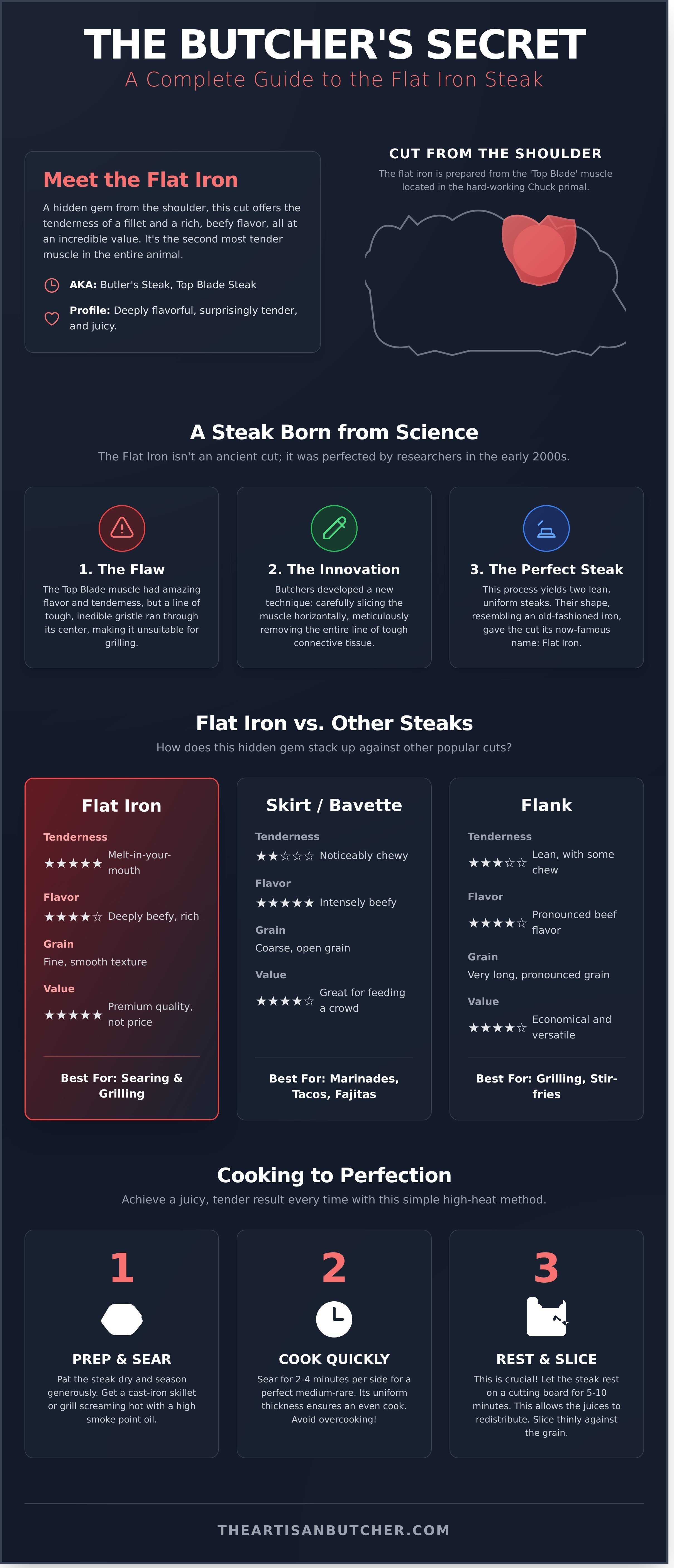
The secret to the flat iron's character lies in its origin. It is carefully prepared from the 'feather' or 'top blade' muscle, located in the hard-working shoulder of the animal, also known as the chuck. This area's constant use is what develops that wonderfully deep, beefy flavour. The real artisan skill, however, comes in the preparation. A tough, inedible line of gristle runs through the centre of the muscle, and a skilled butcher must meticulously remove it. This time-honoured process reveals two lean, perfectly flat steaks, defining the modern Flat iron steak and making it ready for the pan.
What Does Flat Iron Steak Taste Like?
The flavour of a flat iron is truly exceptional. It's intensely beefy and rich, with a subtle sweetness that beef connoisseurs adore. The significant marbling-those fine threads of intramuscular fat-is key to its fantastic texture. As the steak cooks, this fat melts, basting the meat from within and ensuring it remains incredibly juicy and tender. While it rivals a fillet for tenderness, it boasts a much more robust and memorable flavour profile, making it a firm favourite for our team and customers alike.
The Surprising Story: How Science Created a Perfect Steak
Unlike time-honoured cuts like Sirloin or Ribeye, the flat iron steak is a surprisingly modern creation. It wasn't discovered in a traditional butcher's shop but in a university laboratory in the early 2000s. This fantastic cut is a perfect example of how scientific understanding and artisan skill can come together to unlock incredible value and flavour from the beef forequarter.
The story begins with a project where researchers were tasked with finding new ways to use the beef chuck, a traditionally tougher section of the animal often reserved for slow-cooking. By painstakingly mapping every muscle in the chuck and analysing each one for tenderness, they made a remarkable discovery.
The Problem: A Flavourful Muscle with a Tough Flaw
The team identified a muscle called the top blade, which had immense potential. It boasted a deep, rich flavour and beautiful marbling, with a tenderness second only to the fillet. The problem was a thick, incredibly tough strip of connective tissue (fascia) that ran directly through its centre. This flaw made it unsuitable for grilling or frying as a traditional steak, as it left an unpleasantly chewy line down the middle.
The Solution: A New Butchery Technique
The breakthrough was not in cooking, but in butchery. Instead of working around the gristle, the researchers developed a method to remove it entirely. A skilled butcher carefully slices the top blade muscle horizontally, running their knife along the top and bottom of that tough sinew. This intricate process yields two beautifully tender, uniform pieces. Their shape, resembling an old-fashioned metal iron, gave the cut its now-famous name.
This innovative technique transformed an overlooked muscle into a true gem, creating a tender and flavourful steak that offers exceptional value. It’s a wonderful reminder that with passion and expertise, you can find the finest quality in the most unexpected places.
Flat Iron vs. Other Steaks: A Butcher's Comparison
In the world of artisan butchery, we often find customers looking for a quick-cooking steak that doesn't compromise on quality. While cuts like skirt and flank have grown in popularity, the flat iron steak consistently stands out for its remarkable combination of flavour, tenderness, and value. It can be confusing to know which to choose, so our team has put together this simple guide to help you select the perfect cut for your next meal.
Flat Iron Steak vs. Skirt or Bavette Steak
Skirt and bavette steaks are cut from the diaphragm muscles. They are packed with a deep, beefy flavour and have a loose, open grain that is simply fantastic for soaking up marinades. This makes them the champion for dishes like tacos and fajitas. However, they are significantly chewier than a flat iron, which boasts a much finer grain and a melt-in-the-mouth tenderness that skirt can't replicate.
Flat Iron Steak vs. Flank Steak
Taken from the abdominal area, flank steak is a much leaner cut with a very pronounced, long grain. It has a wonderful, robust flavour but is less tender than a flat iron and must be sliced very thinly against the grain to ensure a pleasant chew. The beautiful, delicate marbling within a flat iron gives it a far richer and juicier texture, making it more forgiving to cook and more luxurious to eat.
Flat Iron Steak vs. Sirloin or Ribeye
This is where the flat iron truly proves its worth. Sirloin and Ribeye are time-honoured classics, representing the premium end of the steak world with a price tag to match. A well-prepared flat iron offers tenderness that genuinely rivals a prime sirloin. We believe it delivers a richer flavour than a fillet and is often juicier than a sirloin, making it one of the finest value cuts you can place in your basket.
| Steak Cut | Texture | Flavour Profile | Price Point | Best For |
|---|---|---|---|---|
| Flat Iron | Exceptionally tender, fine grain | Rich, beefy, and buttery | ££ | Grilling, pan-searing, and steak night value |
| Skirt / Bavette | Chewy, coarse grain | Intensely beefy | ££ | Marinades, fajitas, and stir-fries |
| Flank | Lean, fibrous grain | Bold and beefy | ££ | Slicing thin for salads and sandwiches |
| Sirloin / Ribeye | Tender to very tender | Classic, well-rounded steak flavour | £££ | A premium steak experience, special occasions |
How to Cook Flat Iron Steak Perfectly: Simple Methods, Maximum Flavour
At The Artisan Butcher, we believe that a truly exceptional cut of meat deserves to be cooked with care and respect. The key to a perfect flat iron steak lies in a simple, time-honoured principle: high heat and fast cooking. This method locks in the juices and creates that irresistible, caramelised crust. Before you even think about turning on the heat, follow these three essential preparation steps:
- Bring to Room Temperature: Take your steak out of the fridge for at least 30 minutes before cooking. A cold steak cooks unevenly.
- Pat It Dry: Use a paper towel to pat the entire surface of the steak completely dry. Moisture is the enemy of a good sear, so this step is crucial for a deep brown crust.
- Season Simply: A generous coating of coarse sea salt and freshly cracked black pepper is all you need. The quality of the beef should be the star of the show.
Pan-Searing: The Best Method for a Perfect Crust
For a deep, savoury crust that any top chef would be proud of, a heavy-based pan is your best friend. A cast-iron skillet is ideal. Get it screaming hot over a high flame before adding a splash of neutral oil with a high smoke point, like rapeseed oil. Carefully place your seasoned steak in the pan and sear for 2-4 minutes per side for a perfect medium-rare, depending on its thickness. For the final minute, add a knob of butter, a crushed garlic clove, and a sprig of thyme to the pan, basting the steak with the foaming, aromatic butter.
Grilling or BBQ: For a Smoky Finish
When the sun is shining, there's nothing better than the smoky aroma of a steak on the grill. Prepare your barbecue for high, direct heat. Cook the flat iron steak for 2-4 minutes per side, turning it once to get those classic diamond char marks. This straightforward method is perfect for a relaxed, summery meal served with simple salads and a cold drink.
The Golden Rule: Slicing Against the Grain
After cooking, you must rest your steak on a board for 5-10 minutes. This allows the juices to redistribute throughout the meat, ensuring every bite is succulent. Once rested, the final step is non-negotiable for tenderness: slicing against the grain. Look closely at the steak; you'll see the muscle fibres running in one direction. Your knife should cut across these fibres, not parallel to them. This shortens the fibres, transforming what could be chewy into an incredibly tender, melt-in-the-mouth experience. Treating a quality steak with this technique will guarantee a memorable meal.
Why Sourcing Matters: Choosing the Best Flat Iron Steak
With a cut as beautifully simple as the flat iron steak, there is nowhere for poor quality to hide. Its incredible flavour and tenderness are not the result of a complex recipe, but of the quality of the beef itself. This is why understanding where your meat comes from is not just a detail-it's the most important ingredient.
When you're choosing your steak, your eyes are your best guide. Look for two key signs of quality:
- Excellent Marbling: Seek out fine, spidery webs of intramuscular fat. This isn't the thick, hard fat on the outside of a cut; this is the delicate fat that melts during cooking, basting the meat from within to guarantee a juicy, flavourful result.
- A Deep, Rich Colour: The meat should have a vibrant, deep ruby-red hue. This indicates freshness and that the beef has been properly aged, which helps to develop its character and tenderness.
More than anything, the skill of your butcher is paramount. A true artisan butcher understands that preparing a perfect flat iron steak requires carefully removing the tough, silver-skinned seam of gristle that runs through the centre of the muscle. This time-honoured preparation is what transforms it into the tender cut we love, a step that is often rushed or overlooked in mass production.
The Grass-Fed Difference
Our ethos has always been centred on sourcing the finest quality beef from local, low-intensity farms. When cattle are grass-fed and finished, they develop a far more complex and deeper flavour profile-a genuine taste of the land. Beyond the superior taste, grass-fed beef is naturally higher in beneficial Omega-3 fatty acids. This commitment to ethical sourcing is how we ensure every cut we offer meets our exacting standards.
Ask Your Butcher
Never hesitate to talk to your butcher. A good butcher is your greatest ally in the kitchen, ready to share the provenance of the meat, offer cooking advice, and ensure your cut is perfectly trimmed for the pan. The Artisan Team is passionate about sharing our knowledge and helping you get the very best from your food. We believe that great meals begin with a conversation about great ingredients. Explore our grass-fed beef selection and taste the difference that true craftsmanship makes.
The Flat Iron Steak: From Butcher's Secret to Dinner Table Hero
We've journeyed from the butcher's block to the dinner plate, uncovering the secrets of this truly remarkable cut. Once a little-known treasure of the beef shoulder, the flat iron steak is now celebrated for its incredible tenderness-rivalling even the fillet-and its deep, satisfyingly beefy flavour. It's a perfect example of how skilled butchery can unlock exceptional value and taste from parts of the animal that were once overlooked, proving that the finest quality doesn't always carry the highest price tag.
But knowing about this cut is one thing; experiencing it at its absolute best is another. Here at The Artisan Butcher, our ethos is built on sourcing the finest quality meat from local, high-welfare farms that share our passion for tradition. Each steak is expertly prepared by The Artisan Team and carefully dry-aged to develop that superior flavour and melt-in-the-mouth tenderness you deserve. Experience the difference of a true artisan cut. Order our grass-fed Flat Iron Steak for delivery today.
Bring this hidden gem to your kitchen and discover why it's a firm favourite among chefs and butchers alike. We're confident it will become a new favourite at your family table, too.
Frequently Asked Questions About Flat Iron Steak
Is flat iron steak a tough cut of meat?
Absolutely not! In fact, a properly prepared flat iron steak is renowned for its incredible tenderness. This is because our skilled butchers carefully remove the tough central gristle from the original top blade muscle. This time-honoured technique leaves behind a beautifully marbled and flavourful cut that rivals more premium steaks in texture, delivering exceptional quality without the toughness you might expect from a shoulder cut.
Why is it sometimes called a Butler's steak?
This is a lovely nod to its history. The traditional name 'Butler's steak' comes from the belief that this flavourful, tender cut was often kept by the butlers of grand estates for themselves. It was considered a 'butcher's secret'-a prize cut that was too good to be served with the lesser meats but not as well-known as the prime cuts. It speaks to its heritage as a hidden gem, valued by those with a true appreciation for quality meat.
Is flat iron steak better than sirloin?
That really comes down to personal taste, as both are fantastic cuts. Flat iron is prized for its uniform thickness and rich marbling, which makes it exceptionally tender and full of deep, beefy flavour. Sirloin is a leaner classic with a firmer bite and a more straightforward steak taste. If you value tenderness and a buttery texture above all, the flat iron is often the preferred choice. For a traditional, leaner steak dinner, sirloin is hard to beat.
Do you need to marinate a flat iron steak?
You certainly don't have to. A high-quality flat iron from a trusted source has so much natural flavour that a generous seasoning of sea salt and black pepper is all it needs before hitting the pan. Its marbling ensures it stays juicy and tender. However, its texture also makes it a brilliant candidate for marinades. It soaks up flavours beautifully, making it wonderfully versatile for everything from a chimichurri to a teriyaki-style dish.
Is flat iron steak an expensive cut?
It offers exceptional value, which is something we are passionate about providing. While not the cheapest cut due to the skilled butchery required to prepare it, a flat iron delivers an eating experience similar to far pricier steaks like fillet or rib-eye. Here in the UK, it sits at a very reasonable price point, typically costing much less than its premium counterparts. It’s the perfect way to enjoy artisan-quality beef without a hefty price tag.
What is the best way to serve flat iron steak?
The absolute best way is to cook it hot and fast to medium-rare, let it rest for a good 5-10 minutes, and then slice it thinly against the grain. This last step is essential as it shortens the muscle fibres, guaranteeing maximum tenderness in every bite. It’s fantastic served traditionally with chips and a green salad, but it also shines when sliced and placed atop a hearty salad, in steak sandwiches, or as the star in fajitas.