Cart
0
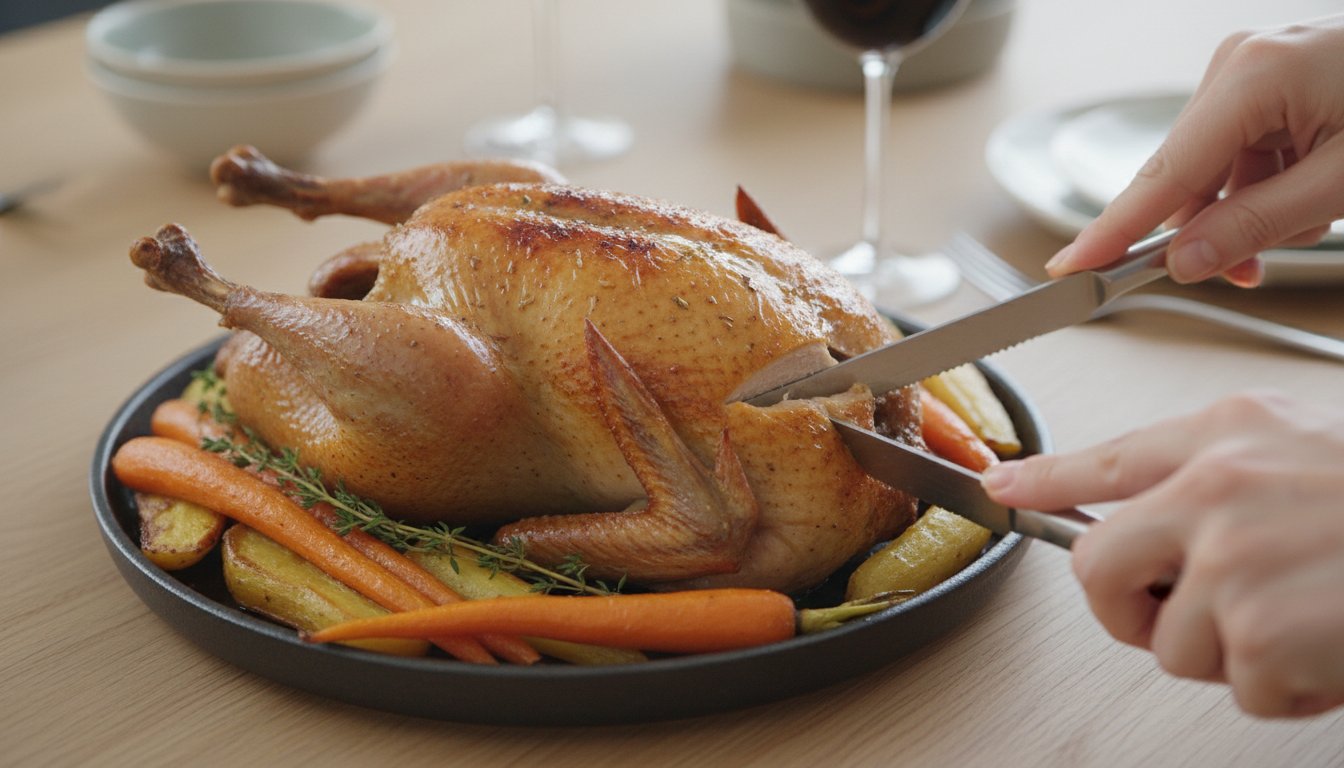
What if that £6 supermarket bird is actually the most expensive way to feed your family once you account for the shrinkage and lack of flavour? Most home cooks have felt the disappointment of a dry roast whole chicken or the headache of trying to decode labels while standing in a busy aisle. We know things are tough at the moment, so it's vital that every penny spent on your Sunday lunch delivers both quality and nourishment.
The Artisan Team is here to help you master your kitchen craft, ensuring you get the succulent, golden results you've been looking for. We promise to show you how to source ethical meat with confidence and use our time-honoured butcher techniques to stretch one bird across multiple delicious meals. We'll walk you through everything from selecting the finest quality poultry to the secret of perfectly seasoned skin, ensuring you have the skills to use every part of the bird so nothing goes to waste.
Key Takeaways
-
Learn the butcher's secrets for spotting a quality bird and why slow-grown, free-range farming is the key to a deeper, more traditional flavour.
-
Master essential preparation techniques, including the vital 30-minute rule for ensuring your whole chicken cooks evenly every time.
-
Discover the professional "High-Low" roasting method to achieve perfectly crispy skin without drying out the delicate breast meat.
-
Take the guesswork out of Sunday lunch with our simple golden rule for calculating precise cooking and resting times.
-
Maximise the value of your shop by learning how to stretch a single bird across three distinct and hearty family meals.
Table of Contents
The Butcher’s Guide to Choosing the Perfect Whole Chicken
Choosing a whole chicken is the first step toward a Sunday roast that actually tastes like the ones your grandparents made. A whole chicken includes the entire bird, often with the giblets tucked inside, providing the most economical way to buy quality poultry. By purchasing the bird intact, you're getting the bones for stock and the fat for roasting potatoes, usually at a price point 20% lower per kilogramme than pre-cut breasts or thighs.
Many cultures have perfected the art of the Roast chicken, but the secret always starts with the quality of the raw ingredient. To see how a quality bird looks once it's prepared and ready for the oven, watch this short demonstration:
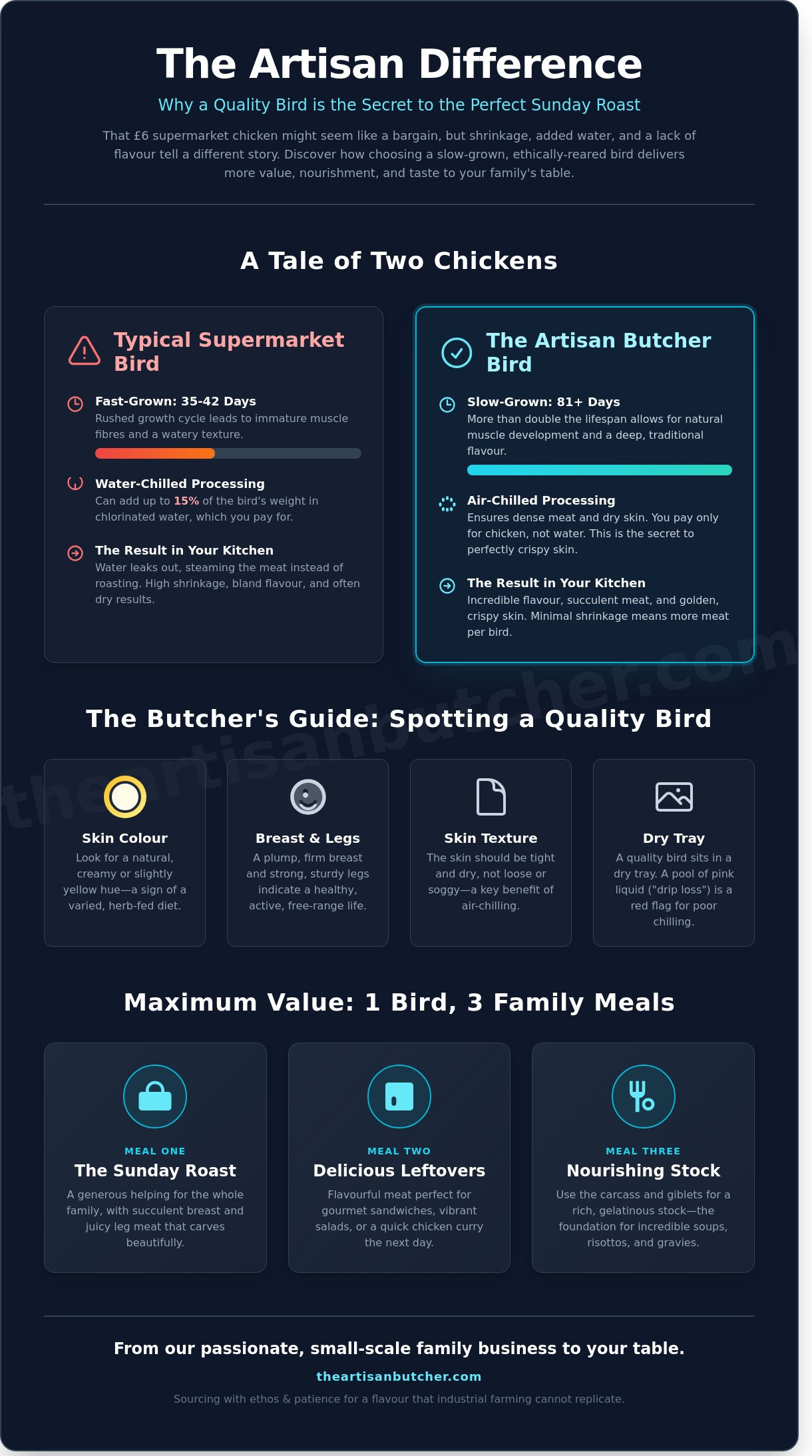
Most supermarket chickens are water-chilled to speed up production. This process can add up to 15% to the bird's weight in chlorinated water, which eventually leaks out in your roasting tin and steams the meat instead of roasting it. Our artisan team prefers air-chilling. This takes longer but ensures the skin stays dry and the meat remains dense. You aren't paying for added water, and the skin crisps up much better in the heat of the oven.
Calculating the right size for your table is simple. We recommend allowing 500g of raw weight per person. If you're feeding a family of four, a 2kg bird is the sweet spot. This ensures everyone gets a generous helping with enough left over for a couple of sandwiches the next day. If you're unsure, speak to your butcher for advice on the best weight for your specific roasting tin.
Visual Markers of a Quality Bird
When you're at the counter, look for clear, unbruised skin and a plump breast that feels firm to the touch. The skin colour is a major giveaway of the bird's lifestyle. A natural, creamy or slightly yellow hue indicates a varied diet and slower growth. If the skin is stark white, it likely comes from a bird raised quickly on a basic grain diet.
-
Examine the legs: Strong, sturdy legs are a sign of a bird that moved freely and exercised its muscles.
-
Check for "drip loss": A quality whole chicken should sit in a dry tray. If there's a pool of pinkish liquid, the bird has likely been poorly chilled or pumped with brine.
-
Skin texture: The skin should look tight and slightly translucent, not loose or soggy.
Giblets: The Secret Bonus
Don't let the giblets go to waste. If they aren't already in the cavity, ask your butcher to include them in your parcel. The neck and heart are essential for creating a traditional gravy, adding a depth of flavour that stock cubes simply cannot match. They contain natural gelatine that gives your sauce a silky, professional finish.
If you aren't roasting the bird immediately, remove the giblets from the cavity as soon as you get home. Store them in a separate airtight container in the coldest part of your fridge. They should be used within 48 hours to ensure they stay fresh. For those who aren't fans of offal, the neck alone is still worth simmering with your aromatics for a superior base. Explore our range online to see the different breeds we currently have in stock.
Why Free-Range and Slow-Grown Matters for Flavour
At The Artisan Butcher, our team believes that truly exceptional food starts long before it reaches our shop in Warwick. We make it our mission to source only from farmers who share our ethos of patience, respect, and low-intensity farming. Most supermarket birds are reared in a staggering 35 to 42 days. In contrast, our free-range chickens are slow-grown for a minimum of 81 days. This extra time allows the bird to develop naturally, resulting in a whole chicken with a depth of flavour that industrial farming simply cannot replicate.
The 81-day growth cycle is vital for the texture of the meat. When a bird is forced to grow too quickly, the muscle fibres don't have time to mature properly, often leading to a soft or watery consistency. By doubling the lifespan of the bird, we ensure the muscle structure is complex and firm. This creates a satisfying bite and a rich, traditional taste that reminds you how chicken used to be. It's about quality over quantity, every single time.
Choosing British free-range poultry is also the most ethical choice for your kitchen. These birds spend their lives outdoors, roaming freely and expressing natural behaviours. This isn't just better for the animal; it directly impacts the nutritional value of your meal. A varied, outdoor diet of grasses, herbs, and insects leads to higher levels of Omega-3 fatty acids and Vitamin E compared to grain-fed, indoor alternatives. It's a more nutrient-dense way to feed your family without compromising on welfare standards.
The Science of Succulence
As a free-range bird moves and forages, it develops what we call intramuscular fat. These are tiny flecks of fat within the muscle itself, rather than just a thick layer under the skin. During the roasting process, this fat melts and bastes the meat from the inside out, ensuring the breast remains moist while the legs develop a deep, savoury character. The difference is also visible in the carcass. Because the bird has lived a full, active life, the bone density is significantly higher than a factory bird. These strong bones are packed with marrow and collagen, which is why they produce such a rich, gelatinous homemade stock. Slow-grown poultry is the gold standard for British roast dinners.
Sourcing Locally in Warwick
We are a local business at heart, and our commitment to Warwick and the surrounding areas is unwavering. By sourcing our meat from nearby farms, we significantly reduce food miles and maintain a transparent supply chain from the farm gate to our butcher’s block. You deserve to know exactly where your food comes from. Our whole chicken options are a cornerstone of our healthy choice products, providing a lean and versatile protein for any day of the week.
We know that providing high-quality meals for your family is a priority, especially when you want the best value for your money. If you're looking for advice on the best size bird for your Sunday lunch, explore our range online or have a chat with our friendly team in the shop.
Expert Preparation: From Trussing to Seasoning
Preparation is where the magic happens. Before you even think about preheating the oven, take your whole chicken out of the fridge. We recommend the 30-minute rule. Letting the bird sit at room temperature ensures the muscle fibres relax. If you put a fridge-cold bird straight into a 200°C oven, the outside overcooks while the centre stays dangerously cool. This simple pause leads to a much more succulent result and a more even cook across the entire bird.
One common question we get at the shop is whether to wash the bird. The answer from the Artisan Team is a firm no. Modern food safety standards, including this USDA guide to chicken safety, explain that washing poultry actually spreads bacteria like Campylobacter around your kitchen through water droplets. It's much safer to pat the skin dry with a paper towel. This also helps you achieve that elusive golden crunch that every roast deserves.
Salt is your best friend for a crispy finish. We suggest salting the skin at least 40 minutes before the bird hits the heat. This allows the salt to draw out moisture, which then dissolves into a brine and is reabsorbed into the meat. It seasons the chicken all the way to the bone. For the cavity, the Artisan Team sticks to time-honoured aromatics. A halved lemon, a smashed bulb of garlic, and a generous bunch of fresh thyme create a fragrant steam that keeps the meat moist from the inside out. These classic flavours complement the rich taste of a free-range bird without overpowering it.
How to Truss a Chicken for Even Roasting
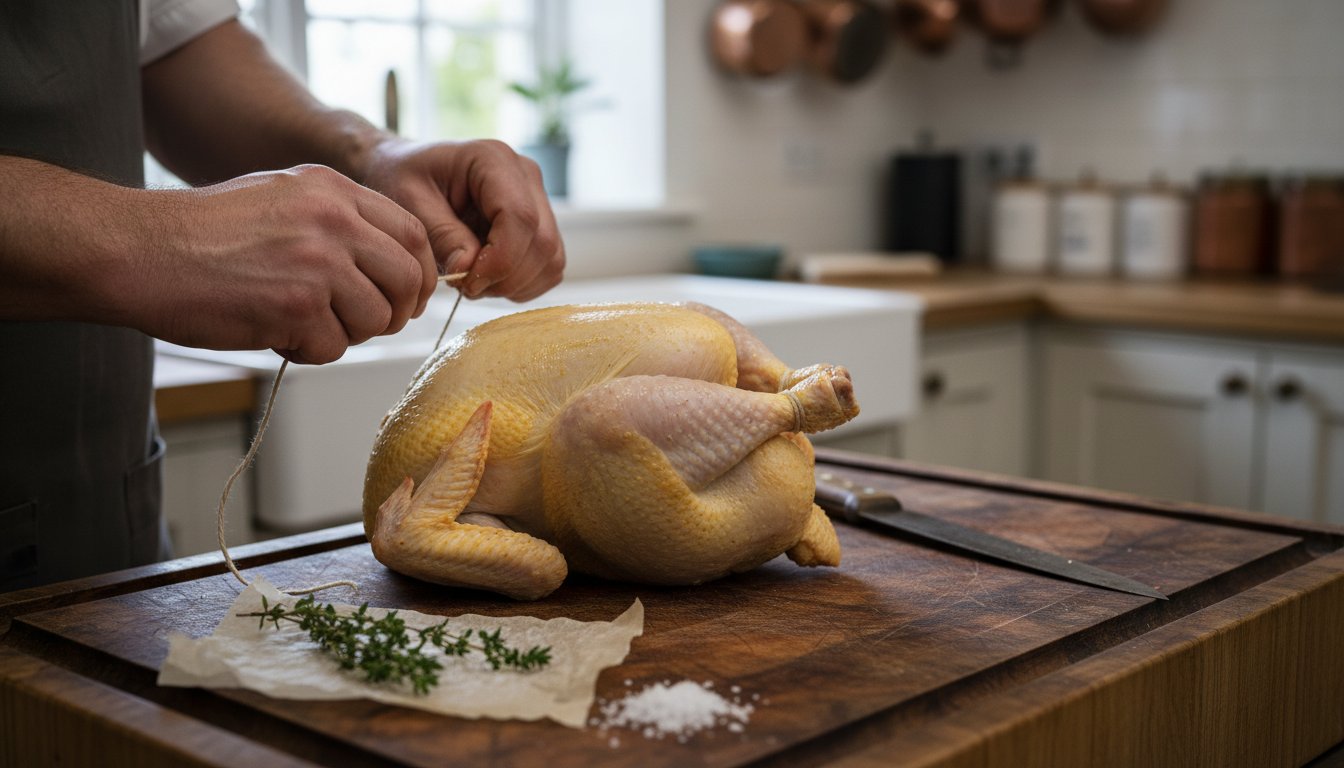
Trussing isn't just for show. Tying the legs together with butcher's twine protects the delicate breast meat from drying out before the thighs are done. Start by tucking the wing tips behind the shoulders to prevent burning. Loop your twine around the drumsticks and pull them tight against the body. This compact shape ensures the bird roasts uniformly every time. It's a simple skill that elevates your home cooking to a professional standard.
Alternative Prep: The Spatchcock Method
If you're short on time, spatchcocking is a game changer. By removing the backbone, you flatten the whole chicken, which exposes more skin to the direct heat and reduces cooking time by roughly 30%. This method is perfect for the BBQ or a quick Tuesday night dinner because every inch of skin gets crispy. If the idea of using kitchen shears on a carcass feels daunting, just ask. The Artisan Team can spatchcock any bird for you in-store, saving you the effort at home.
Looking for the best quality bird? Explore our range of free-range poultry online or visit us in Warwick for expert advice.
The Art of the Roast: Timings, Temperatures, and Tents
We always recommend the high-low method for a whole chicken. It's a simple trick used by professional chefs to balance texture and moisture. You'll want to preheat your oven to 220°C (200°C fan) and roast the bird for the initial 20 minutes to blast the skin with high heat. This initial burst renders the fat quickly and begins the browning process. Once that time is up, turn the dial down to 190°C (170°C fan) for the remainder of the cook. This lower temperature allows the heat to penetrate the deeper muscles without drying out the delicate breast meat.
Calculating your timings is the next hurdle for any home cook. The golden rule we share at the counter is 20 minutes of cooking time for every 450g of weight, plus an additional 20 minutes at the end. For a standard 1.8kg bird, this equates to roughly 100 minutes in total. While these estimates provide a solid baseline, every oven behaves differently. Old gas marks can be temperamental, and modern fan ovens often run hotter than the digital display suggests.
To be certain your dinner is perfect, a digital meat thermometer is your best friend. Insert the probe into the thickest part of the thigh, making sure you don't hit the bone. You're looking for a reading of 75°C. At this temperature, the juices run clear and the meat is safe to eat while remaining incredibly succulent. If you rely on guesswork, you risk either a dry bird or a nervous trip back to the oven.
Resting is the most ignored step in the kitchen. When you take the meat out of the heat, the muscle fibres are tight and the juices are pushed to the surface. If you carve immediately, those juices end up on your wooden board rather than in your mouth. Cover the tray loosely with a foil tent and a clean tea towel for at least 20 minutes. This allows the fibres to relax and reabsorb the moisture, ensuring every slice is tender.
Perfecting the Crispy Skin
Fat is the key to a golden finish. Rub the skin generously with softened unsalted butter or a high-quality cold-pressed rapeseed oil before it goes into the oven. To avoid a soggy bottom, don't let the bird sit in its own juices. Create a natural trivet by roasting it on a bed of chopped carrots, onions, and celery to elevate the meat. The Maillard reaction is responsible for the savoury, browned crust we all love, and it requires a dry, oiled surface to work its magic.
Making Traditional Butcher’s Gravy
Never throw away the sediment left in your roasting tin. Deglazing the tin with a splash of dry white wine or a little hot stock captures every bit of caramelised flavour from the bottom. We suggest incorporating a home-made giblet stock for a rich, time-honoured finish that depth-less supermarket cubes can't match. If you need to thicken it, whisk in a teaspoon of cornflour mixed with cold water or simply let the liquid reduce naturally on the hob until it coats the back of a spoon.
If you're planning your next Sunday roast, our team is always happy to help you select the right size bird for your family.
Explore our range of free-range poultry online
Maximum Value: Turning One Bird into Three Family Meals
Buying a quality whole chicken is a masterstroke in kitchen economy. While a pack of supermarket fillets might seem convenient, you lose the depth of flavour and the versatility that comes with the entire bird. A 2kg free-range bird provides enough meat for a family of four to enjoy a substantial roast, with enough remaining for two more sittings. By choosing the bird over individual cuts, you can save up to 30% on your weekly meat spend. Our team believes that respect for the animal means using every single part, a practice that rewards your pocket and your palate.
-
Meal 1: The Classic Sunday Roast. This is the centrepiece. Serve your bird with crispy potatoes, seasonal greens, and a rich gravy made from the roasting juices. A slow-grown bird retains its moisture, ensuring the white meat stays succulent.
-
Meal 2: The Mid-Week Boost. Use the remaining breast and leg meat for a hearty Coronation Chicken salad or a comforting chicken and leek pie. The firmer texture of free-range meat holds up beautifully in sauces without falling apart.
-
Meal 3: Liquid Gold. The final act involves the carcass. By simmering the bones, you create a nutrient-dense stock that serves as a base for risottos, soups, or stews. It is far superior to any store-bought cube.
Zero-Waste Butchery at Home
Stripping a carcass efficiently ensures no protein goes to waste. Once the bird has cooled, use your fingers to pull away the smaller nuggets of meat from the underside and the wings. These "butcher's morsels" are often the most flavourful parts. Always store your leftovers safely by cooling them within 90 minutes of cooking. You can keep the meat in the fridge for up to two days, or freeze it for up to three months. If you are looking to stock up, check out our special offers for multi-buy deals on our finest birds.
The Ultimate Bone Broth
To create a truly gelatinous stock, place your whole chicken carcass in a large pot with a mirepoix of one onion, two carrots, and two sticks of celery. Cover with cold water and a splash of apple cider vinegar to help extract the minerals. Simmer the pot gently for 4 to 6 hours. Our birds are slow-grown for up to 81 days, which is nearly double the age of intensive supermarket chickens. This extra time allows for significant collagen development in the joints and bones. The result is a thick, jelly-like stock that is packed with protein and gut-friendly nutrients. We even suggest our canine treats as another way to ensure even the dog enjoys the artisan experience, leaving absolutely nothing for the bin.
Bring the Best to Your Sunday Table
Serving a truly memorable roast starts with a bit of butcher's knowledge and a bird that's been raised the right way. By choosing a slow-grown, free-range bird, you're opting for deeper flavour and better texture than any mass-produced supermarket alternative. It's about more than just one meal; a single whole chicken can easily stretch across three family dinners if you follow our tips on roasting and use the carcass for a nutrient-rich stock. Our award-winning local sourcing ensures every bird meets our high standards for animal welfare and exceptional taste.
The Artisan Team prepares every order with traditional care and time-honoured techniques to make your job in the kitchen as straightforward as possible. We take great pride in our craft, and with over 500 five-star customer reviews, you can trust us to provide the quality your family deserves. Whether you're a seasoned cook or just starting out, we're here to help you get the best results every time you light the oven.
Order your free-range whole chicken for local delivery or click & collect
We look forward to helping you create something special for your next family gathering.
Frequently Asked Questions
How long does a whole chicken take to cook per kg?
A standard whole chicken requires 45 minutes of roasting time for every kilogram, plus an additional 20 minutes at the end to ensure it's cooked through. For a typical 1.5kg bird from our shop, this means a total cooking time of roughly 88 minutes at 190°C or 170°C in a fan oven. We always recommend letting the meat rest for at least 15 minutes after it leaves the oven to allow the juices to settle.
How can I tell if my roast chicken is cooked without a thermometer?
You can check if your bird is ready by piercing the thickest part of the thigh with a skewer or small knife. If the juices run completely clear without any pink or red tints, the chicken is safe to eat. Another reliable sign is that the legs should feel loose and move easily when you wiggle them. If you see any blood, pop it back in the oven for another 10 minutes before checking again.
Can I freeze a whole chicken from the butcher?
You can certainly freeze a fresh whole chicken as soon as you get it home from our counter. It will stay at peak quality for up to 6 months in a standard domestic freezer, provided it's wrapped tightly to prevent freezer burn. When you're ready to cook, defrost it slowly in the fridge for 24 hours. Never cook a bird that's still partially frozen in the middle, as it won't cook evenly or safely.
What is the difference between free-range and organic chicken?
Free-range birds must have access to outdoor ranges for at least 50% of their life, while organic chickens are raised to even stricter Soil Association standards. Organic birds eat a diet free from GMOs and spend their lives on land that hasn't been treated with artificial fertilisers for at least 2 years. Our free-range chickens live longer, slower lives than factory-farmed birds, which results in a deeper flavour and much firmer texture.
How do I get the skin on my chicken really crispy?
The secret to golden, crackling skin is making sure the bird is completely dry before it goes into the oven. Pat the skin with kitchen paper and leave it uncovered in the fridge for 2 hours if you have the time. Rub the surface with a bit of softened butter or olive oil and a generous pinch of sea salt. This salt draws out moisture, helping the skin crisp up beautifully during the roasting process.
Should I cover my chicken with foil while roasting?
We recommend roasting your chicken uncovered to allow the heat to circulate and crisp the skin effectively. You only need to reach for the foil if you notice the breast is browning too quickly before the legs are done. In that case, a loose tent of foil over the top will protect the delicate white meat. For the final 20 minutes, always remove any covering so the bird develops that traditional roasted colour.
How many people will a 2kg whole chicken serve?
A 2kg bird typically serves 4 to 6 adults comfortably, depending on how many side dishes you're providing. This size is ideal for a Sunday roast, often leaving enough leftovers for a couple of sandwiches the next day. If you're feeding a larger group or want plenty of meat for a Monday curry, we suggest choosing one of our larger 2.5kg birds. Our team is always happy to help you pick the right size.
What should I do with the giblets found inside the bird?
Don't throw those giblets away; they are the secret ingredient for the best homemade gravy you'll ever taste. Simmer the neck, heart, and gizzard in a pan with some water, an onion, and a carrot while the bird roasts. This creates a rich, deep stock that beats a supermarket cube every time. Just remember to remove the liver if it's included, as it can make the stock taste slightly bitter if simmered for too long.