Cart
0
What if the most expensive cut on the butcher's counter isn't actually the best choice for your Sunday lunch? While many home cooks instinctively reach for a leg, 9 out of 10 traditional butchers will tell you that a lamb shoulder is the real secret to a flavourful, meltingly tender meal. We know it's frustrating when you've spent hours waiting for a roast only for it to come out dry, or if you're unsure how many kilograms you need to feed a hungry family of five.
You shouldn't have to guess when it comes to quality. This guide will help you master the art of the slow-roast, providing you with our artisan team's foolproof method for a succulent, pull-apart finish every time. We'll explain why grass-fed provenance matters for taste, how to tell your shoulder from your leg, and exactly what to look for when you're standing at the counter so you can shop with total confidence.
Key Takeaways
- Understand why the lamb shoulder is a butcher's favourite and how its unique fat marbling ensures a succulent, tender result.
- Learn how to choose the right joint for your table, weighing up the rich flavour of bone-in cuts against the easy carving of a rolled shoulder.
- Discover the essential preparation steps, from scoring the fat to room-temperature resting, that guarantee even cooking and better flavour penetration.
- Master our "low and slow" roasting method to transform this hardworking cut into a melt-in-the-mouth masterpiece after four to five hours in the oven.
- Pick up expert serving suggestions, including the best ways to carve your roast and the traditional pairings that bring out the best in the meat.
What is Lamb Shoulder and Why is it the Butcher’s Favourite?
If you ask any of the Artisan team which joint they take home for a Sunday roast, the answer is almost always the lamb shoulder. This cut comes from the top of the front leg, a hardworking area of the animal that develops a deep, rich flavour profile. Unlike the leaner leg, the shoulder is packed with internal marbling and connective tissue. You can learn more about the various traditional preparations of Lamb and mutton to see how these muscles function across different cultures.
To better understand the texture and potential of this cut, watch this helpful video showing a simple preparation method:
The secret to a succulent roast lies in the fat factor. While some shoppers shy away from visible fat, a butcher knows it is the lifeblood of a good meal. As the lamb shoulder cooks, the intramuscular fat melts into the meat, basting it from the inside out. This natural process ensures the joint remains moist even after several hours in the oven, providing a depth of flavour that leaner cuts simply cannot match.
Understanding the Anatomy of the Cut
The shoulder is a complex network of muscles that work hard during the animal's life. This constant activity builds up high levels of collagen and connective tissue. When you cook it low and slow, this collagen transforms into silky gelatine, which creates a luxurious mouthfeel. We always recommend choosing grass-fed lamb for your lamb shoulder; the natural diet of clovers and grasses produces a cleaner, more complex fat flavour than grain-fed alternatives.
When to Choose Lamb Shoulder
The main difference between the shoulder and the leg is the cooking time and final texture. A leg of lamb is perfect for a medium-rare roast served in neat slices; however, the shoulder is the premier choice for "pull-apart" textures that melt in the mouth. It is a very forgiving cut for beginners because the high fat content makes it nearly impossible to overcook. If you're hosting a dinner party and get distracted, an extra 45 minutes in the oven usually makes the meat even better rather than ruining it.
British lamb reaches its peak quality between May and October. During these months, the meat is tender and the flavour is at its most vibrant. It is the ideal centerpiece for a "set and forget" weekend meal. If you are looking for great value for your family, keep an eye on our special offers for seasonal deals on whole or half shoulders. Speak to your butcher for advice on how to trim the joint for your specific recipe.
How to Choose the Best Lamb Shoulder
Picking the right cut is the foundation of a successful meal. At our shop, we believe the quality of the raw ingredient does half the work for you. When you're at the counter, look for meat that's a vibrant, deep pink. If the meat looks pale or grey, it's likely past its best. The fat should be firm and creamy white, rather than yellow or oily. This fat is vital because it renders down during the long roast to baste the lamb shoulder from the inside, keeping it succulent.
The Artisan Team sources lamb from local farms located within 30 miles of our Warwick base. We prioritise low-intensity farming because we know that animals raised naturally on grass produce far superior flavour. This commitment to provenance means you're getting meat that hasn't travelled thousands of miles. It's fresher, more ethical, and supports our local agricultural community.
Bone-in vs. Rolled Joints
A whole shoulder on the bone is the traditional choice for a slow roast. The bone acts as a natural heat conductor, helping the meat cook evenly while adding a depth of flavour you won't find in a boneless cut. If you're looking for inspiration, this Slow-Cooked Beer-Braised Lamb Shoulder recipe shows how well the bone-in cut holds up to long cooking times. It's the ultimate "set and forget" meal for a busy Sunday.
Rolled joints are a practical alternative for those who prefer an easy life at the carving board. We remove the bone and tie the meat into a neat cylinder, which makes it incredibly simple to slice. It's also the best option if you want to rub herbs, citrus zest, or garlic into the centre before roasting. You can explore our range online to see the seasonal deals we have on both styles.
Sizing Guide for Your Roast
Sizing your joint correctly ensures nobody leaves the table hungry. For a bone-in lamb shoulder, we recommend allowing 350g to 500g per person. This might sound like a generous portion, but you must account for the weight of the bone and the fat that renders away in the oven. For a rolled, boneless joint, you can reduce this to 250g to 300g per person.
- 3-4 Guests: A half shoulder (approx 1.2kg) is usually plenty.
- 6-8 Guests: Look for a large whole shoulder weighing around 2.5kg.
- Leftovers: Buying a larger joint is a smart move for Monday lunch. Cold roast lamb is fantastic in spicy wraps or tossed through a fresh seasonal salad.
Our team in the Warwick shop can prepare a joint to any specific weight you need for your dinner party. If you can't make it in to see us, you can always order for local delivery to get butcher-quality meat brought straight to your door.
Preparing Your Lamb Shoulder for the Oven
Take your lamb shoulder out of the fridge at least 60 minutes before it meets the heat. Cooking a cold joint leads to uneven results; the outside often overcooks and dries out while the centre remains stubborn and tough. Letting the meat reach room temperature ensures the heat penetrates the muscle fibres evenly from the moment it enters the oven.
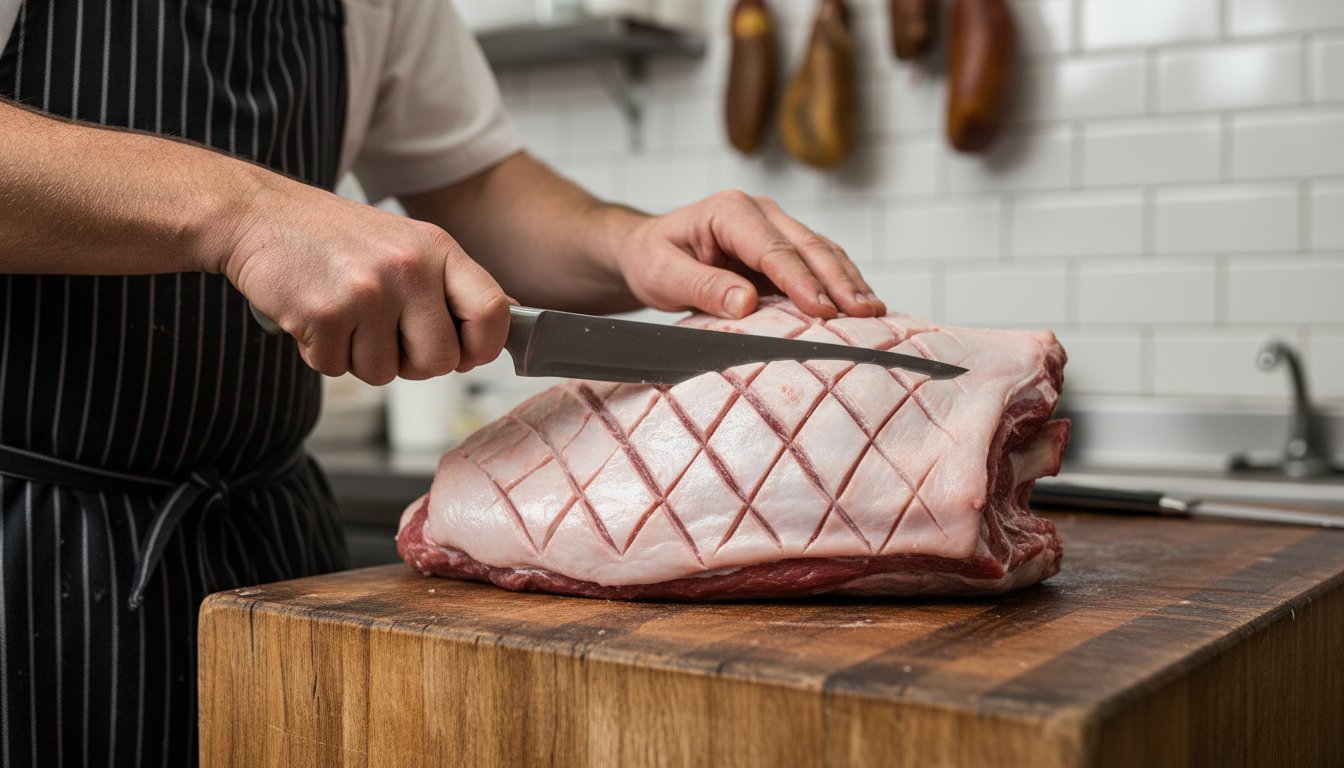
Use a sharp boning knife to score a diamond pattern into the fat cap. This technique allows the fat to render down beautifully, naturally basting the meat as it melts over several hours. It also creates deep channels for your seasoning to reach the meat rather than just sitting on the surface. Our team always recommends a generous coating of the "holy trinity" of lamb seasoning: sea salt, fresh rosemary, and plenty of garlic.
Avoid placing your meat directly on the base of the roasting tin. Instead, create a natural trivet using two halved onions, three large carrots, and a head of celery. This lifts the roast to allow hot air to circulate underneath while preventing the bottom of the joint from boiling in its own fats. These vegetables will caramelise over time, providing the essential sugars and depth needed for a traditional gravy.
Flavour Profiles and Rubs
For a traditional British finish, mix chopped rosemary and garlic with three finely minced anchovies. The anchovies melt away completely during the cook, leaving a deep umami richness that highlights the natural sweetness of the lamb. If you prefer a Middle Eastern twist, rub the joint with two tablespoons of toasted cumin, ground coriander, and fresh lemon zest. Ensure your scoring only goes through the creamy fat layer; cutting into the meat itself allows precious juices to escape, which can lead to a drier finished product.
The Role of Liquid in the Tin
Pour 250ml of quality beef stock or a splash of dry red wine into the bottom of the roasting tin before sealing it with foil. This liquid prevents the vegetable trivet and meat drippings from scorching during the long, slow cook. The resulting steam creates a humid environment in the oven, which keeps the lamb shoulder succulent during the first three hours of roasting. Once the meat is tender, these enriched juices form the foundation for the ultimate butcher’s gravy. If you are planning a Sunday roast for the whole family, you can find high-quality joints in our range of meat boxes available for local delivery.
The Ultimate Slow-Roast Method: Low and Slow
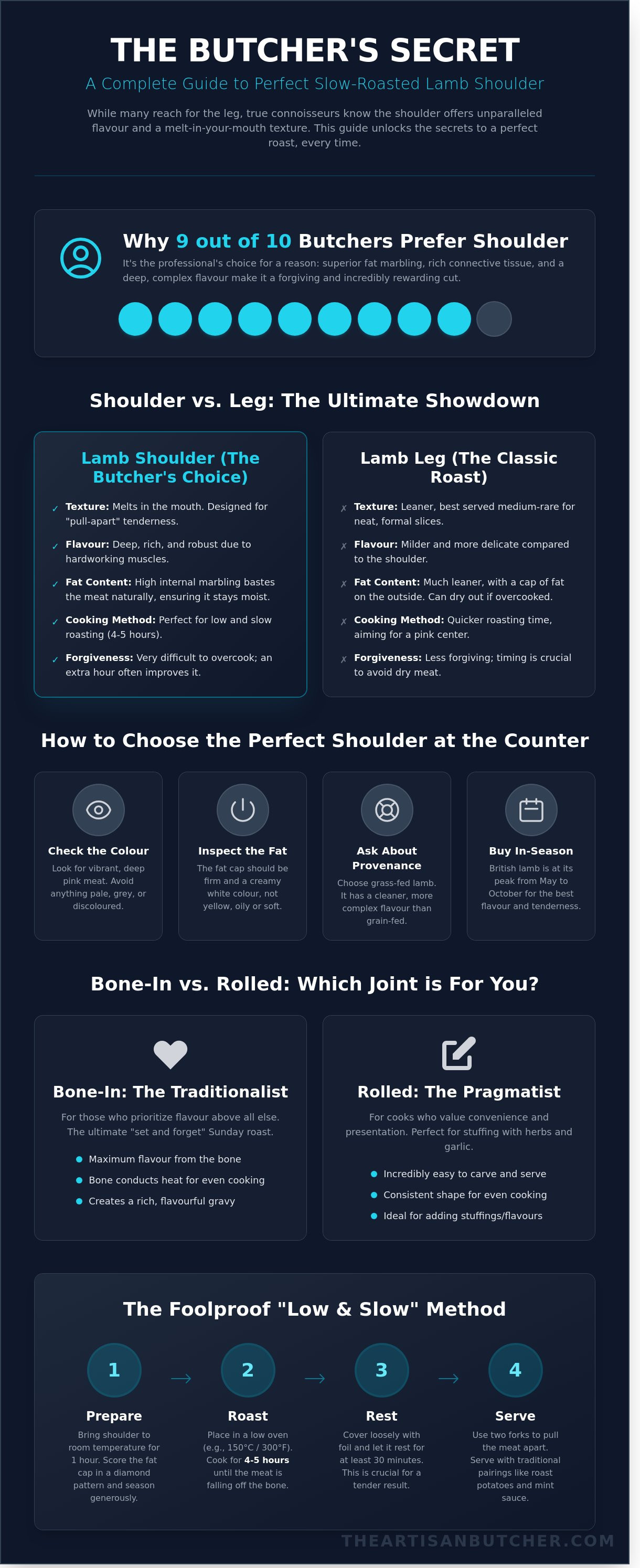
Patience is the most important tool in any cook's kitchen when preparing a lamb shoulder. At the shop, we often explain to customers that this cut is a marathon runner, not a sprinter. It requires steady, gentle heat to transform from a firm muscle into something you can pull apart with a spoon. The magic formula we swear by is 4 to 5 hours at a consistent 140°C, which allows the connective tissues to melt without drying out the lean meat.
Starting with a burst of high heat is essential for developing a deep, savoury crust. Once you've achieved that initial colour, dropping the temperature creates a gentle poaching effect within the meat's own fats. You don't need to baste it constantly; in fact, every time you open the oven door, you lose valuable heat and moisture. Trust the process and leave the oven shut for at least the first 3 hours to let the lamb shoulder do its thing.
The final, non-negotiable step is the resting period. We recommend a full 30 minutes of rest once the meat is out of the oven. This gives the muscle fibres time to relax and reabsorb the juices that have been pushed to the surface. If you skip this, the moisture will simply run out onto your carving board, leaving the meat dry and tough.
Step-by-Step Cooking Guide
- Step 1: Preheat your oven to 220°C. Roast the joint uncovered for 20 minutes to brown the exterior and start the fat rendering process.
- Step 2: Reduce the oven temperature to 140°C or 150°C. Cover the roasting tin tightly with a double layer of foil to trap every bit of steam.
- Step 3: For the final 30 minutes of cooking, remove the foil. This allows the skin to crisp up and the exterior to develop a rich, dark glaze.
How to Tell When It’s Done
You won't need a carving knife if you've followed the low and slow method correctly. Perform the fork test by pressing a utensil into the thickest part of the meat; it should yield and pull away with zero resistance. If there is any "bounce" or tension, it needs another 30 minutes under the foil.
For those who prefer a scientific approach, use a meat thermometer to check the internal temperature. You're aiming for 90°C for a truly "pulled" texture. Once you hit this mark, remove it from the oven and wrap it in fresh foil and a clean tea towel. This insulation keeps the joint warm while the internal structures settle into their final, tender state.
Ready to get started? Explore our latest special offers to find the perfect cut for your next Sunday roast.
Serving Suggestions and The Artisan Difference
Once your lamb shoulder has rested for at least 30 minutes, you need to decide on the presentation. If you followed a shorter roasting time of around four hours, you can carve thick, succulent slices that hold their shape well on the plate. For those who opted for a low and slow eight hour roast, the meat will be tender enough to pull apart with two forks. Pulling the meat is often the preferred choice for a lamb shoulder because it allows every shred to soak up the rich, flavourful resting juices.
To complete the meal, we recommend traditional pairings that balance the richness of the meat. A heap of buttery mashed potato and a side of seasonal greens, such as cavolo nero or spring cabbage, work perfectly. Don't forget the mint sauce; a homemade version using fresh garden mint and a splash of cider vinegar provides the necessary acidity to cut through the fat. These simple additions respect the quality of the meat without overshadowing its natural flavour.
What to Do With Leftovers
If you have any meat remaining, it can be transformed into a variety of quick midweek meals. Shredded leftovers make a much richer shepherd's pie than standard lamb mince, especially when the sauce is bolstered with a little leftover gravy. For a modern twist, use the last bits of the shoulder in soft corn tacos with pickled red onions and a squeeze of lime. If you enjoy having versatile cuts like this in your freezer, you can easily add a shoulder to one of our custom meat boxes.
The Artisan Butcher Ethos
Our commitment to quality is rooted in our support for low intensity farming and traditional preparation. We’ve spent over 15 years building relationships with farmers who share our values, ensuring our meat is always grass-fed and ethically sourced. This slower, natural growth process results in the superior marbling and deep flavour that sets artisan butchery apart from supermarket options. Our team in Warwick is always happy to provide bespoke trimming or advice on how to get the best from your roast. When you're ready to start cooking, you can order your grass-fed lamb shoulder for convenient local or national delivery.
Bring the Butcher’s Best to Your Sunday Table
Mastering a roast starts with understanding the cut and giving it the time it deserves. By opting for a lamb shoulder and following the low and slow method, you'll achieve a tender, falling-off-the-bone texture that supermarket alternatives simply can't match. The key takeaways are simple: prioritise slow cooking to break down the connective tissues, and always choose meat with clear provenance. Our Artisan Team of 5 skilled butchers in Warwick hand-prepares every joint to ensure it meets our traditional standards before it reaches your kitchen.
We source our meat from local farms within a 30-mile radius that follow 100% low-intensity farming methods, ensuring full traceability for your family. You don't have to live in Warwickshire to enjoy these traditional cuts, as we provide UK-wide courier shipping to over 95% of postcodes. This brings the expertise of a local, family-run business directly to your door, wherever you are in the country. We want you to feel confident and supported every time you step up to the oven.
If you're ready to put these tips into practice, you can order your grass-fed joint for delivery today. We look forward to helping you create a truly memorable meal for your loved ones.
Lamb Shoulder Frequently Asked Questions
Is lamb shoulder better than lamb leg?
Lamb shoulder is generally better if you want melt-in-the-mouth, pull-apart meat, whereas the leg is better for traditional pink slices. Because the shoulder comes from the harder-working front of the animal, it contains about 15 percent more connective tissue and intramuscular fat than the leg. This fat renders down during a long roast, basting the meat from the inside and providing a deeper, richer flavour. It's the preferred choice for our team when we're planning a slow-cooked family feast.
How long does a 2kg lamb shoulder take to cook?
A 2kg lamb shoulder usually takes 4 hours in a fan oven set to 160°C for a tender, sliceable finish. If you prefer the meat to fall off the bone, extend this to 5 hours at a lower temperature of 140°C. Always allow the joint to rest for at least 30 minutes after it leaves the heat. This resting period lets the juices redistribute, ensuring your roast is moist and easy to carve for your guests.
Should I cover lamb shoulder with foil when roasting?
You should cover your lamb shoulder with a tight layer of foil for the first 3 hours of cooking to retain essential moisture. This creates a sealed environment that traps steam, helping to break down those tough fibres without drying the meat out. For the final 45 minutes, remove the foil and turn the heat up to 200°C. This allows the fat to crisp up, giving you that delicious, golden skin that adds a wonderful texture to the dish.
Can you overcook lamb shoulder in a slow cooker?
You can overcook a lamb shoulder in a slow cooker, though it's much harder to do than with leaner cuts. While the meat needs plenty of time to soften, leaving it for more than 10 hours on a low setting can cause the proteins to collapse completely. This results in a texture that feels mushy or unpleasantly stringy rather than tender. We recommend checking the meat after 7 hours to ensure it still has its signature artisan structure.
Why is my lamb shoulder tough after cooking?
Your lamb shoulder is likely tough because it hasn't been cooked for long enough to break down the collagen. Unlike a steak, this cut is full of connective tissue that only turns into silky gelatin when held at a consistent heat for at least 3 or 4 hours. If you try to rush the process or take it out too early, the muscle fibres will stay tight and chewy. Put it back in the oven, add a splash of liquid, and give it another hour.
How many people does a whole lamb shoulder serve?
A whole bone-in lamb shoulder weighing approximately 2.5kg will serve 6 to 8 people generously. You should account for about 25 percent shrinkage during the long cooking process as the fat renders away into the pan. If you're serving a smaller group of 4, a half shoulder is usually plenty. Our butchers suggest allowing 350g of raw meat per person to ensure there are enough leftovers for a sandwich the next day.
Do I need to brown the meat before slow cooking?
You don't strictly need to brown the meat, but searing it in a hot pan for 10 minutes adds a vital depth of flavour. This browning process creates a caramelised crust that develops a complex, savoury sweetness in the finished gravy. If you're in a rush, you can skip this step, but your dish will lack the rich, dark colour and intense aroma that comes from those properly seared meat juices. Speak to your butcher for more tips on getting the perfect sear.